There is an unmistakable irony in the return to line-driven ideas. Given that the current media landscape is so fractured and diverse, it’s striking that the thing I’m most often asked to develop feels pulled from an earlier era of advertising. “Slogan” is an arcane term that harkens back to a bygone era. What is interesting is its recent return to glory.
It’s important to point out that this was the period dominated by print ads, outdoor, radio, and television. Those were the mediums that defined advertising. Of course, there were other mediums like direct mail and POP (point of purchase), but they were considered lesser forms. These were the olden days that inspired Mad Men.
The current media landscape is nothing like what it was. In fact, nothing is like what it was. Everything is bigger, broader, and more chaotic. So, the revival of the slogan feels very strange indeed.
The request that I often get is for a slogan, and only a slogan. The narrowness of the ask feels particularly odd. Headlines, taglines, or whatever you prefer to call them have been around since Jesus wore Chuck Taylors. But why the big comeback?
A single unifying idea is more important than ever
Language works across mediums in a way few things can. Even across a fragmented mix of messages and tactics, a single line of copy can hold a brand together—an idea that makes everything click.
When I first became aware of advertising, the majority of it was headline-driven. That was the default for solving creative problems, or at least for making ads. Most often, visuals were there in a supporting role to the words. Language held the emotional sway.
After discussing the brief and understanding the problem to be solved, creative people would try to solve that problem by shot-gunning headlines. Something with a double entendre was often the goal. Pithy, witty, dry, and often sardonic – a good line would invite you to change the way you thought about something or reinforce what you already knew and liked. They would ask you to “think different,” “reach out and touch someone,” “just say no,” or make us laugh with “where’s the beef?”
Saatchi’s anti-Labour Party headline “Labour isn’t working” comes to mind as a classic example of a line with double meaning. It was provocative, resonant, and very successful. It helped change the political trajectory of Great Britain. It expressed the Labour Party’s time in office as a failed and ultimately painful misstep. It was also a terrific demonstration that successful headlines could be entirely negative.
Coining the phrase that pays was what so often moved the needle
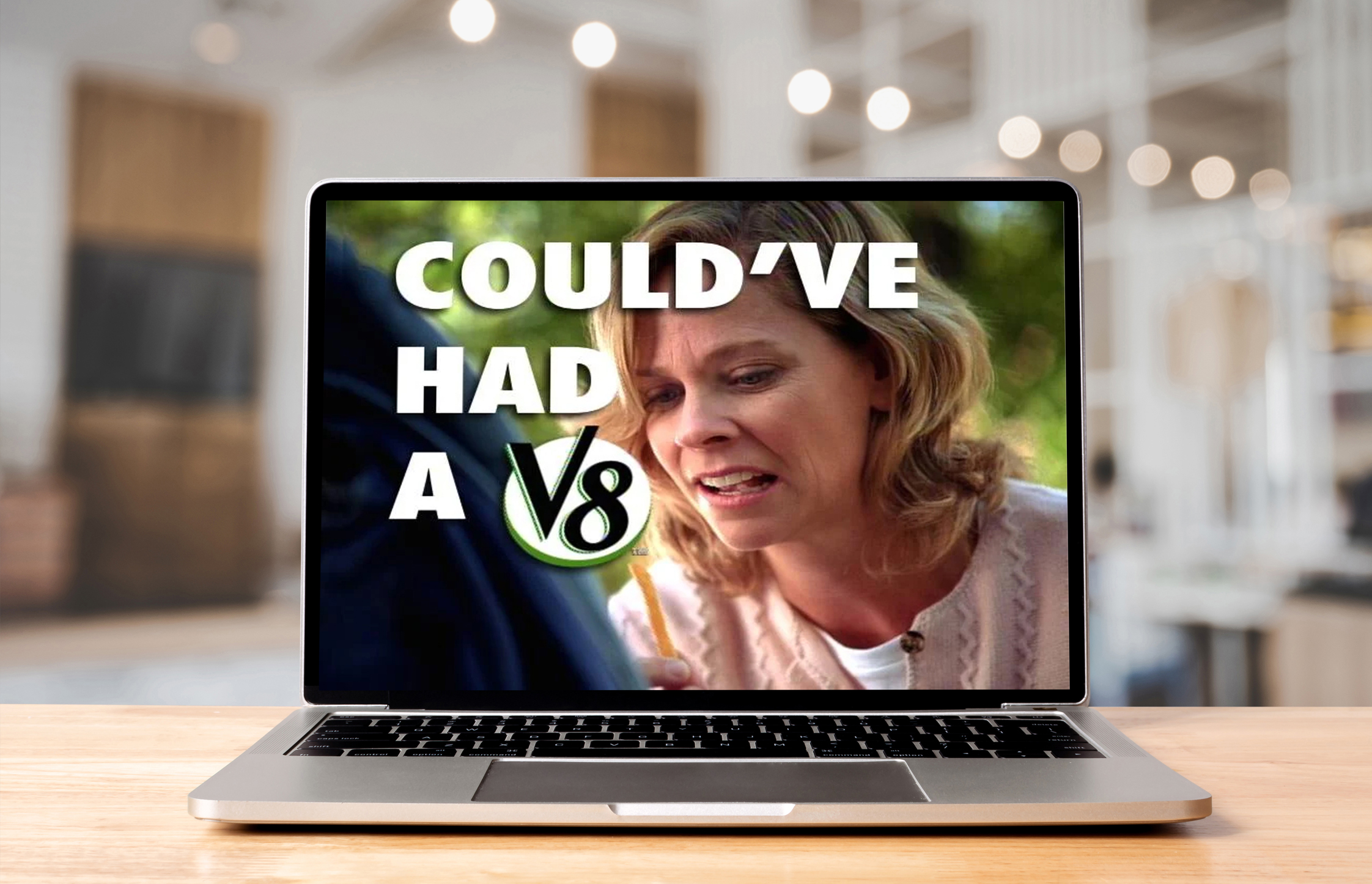
Campaign lines like “Wow! I could have had a V8” or “Don’t squeeze the Charmin” left permanent tracks in our memories. “I’d walk a mile for Camel” and “Come to Marlboro Country” gave tobacco brands a sense of identity. Coca-Cola reminded us of the importance of reaching for genuine with “The Real Thing.” Nike’s “Just do it” was a call to action that inspired millions and turned a running shoe brand into a global phenomenon.
During the 1990s and well into the new millennium, there was a shift toward visually driven advertising solutions. It wasn’t a complete move away from language, but line-driven campaigns were no longer fashionable. A perfect ad was considered one that could communicate the desired message without resorting to a headline. Even better if you could make your point without any words at all. Great visual solutions could overcome the boundaries of language and culture. Taglines still persisted, but those final thoughts were relegated to an area around the logo.
And now, in a landscape defined by infinite scroll, fractured attention, and algorithmic overload, the return of the slogan starts to make sense. When everything is competing, multiplying, and demanding to be seen at once, clarity becomes currency. A single, well-forged line can cut through the noise in a way that sprawling campaigns often can’t. It travels easily, adapts effortlessly, and anchors meaning when everything else feels disposable. What once looked like a nostalgic throwback is, in fact, a practical response to chaos: a way to give brands a center of gravity again. In an age of excess, the discipline of saying one thing well might be the most modern move there is.